
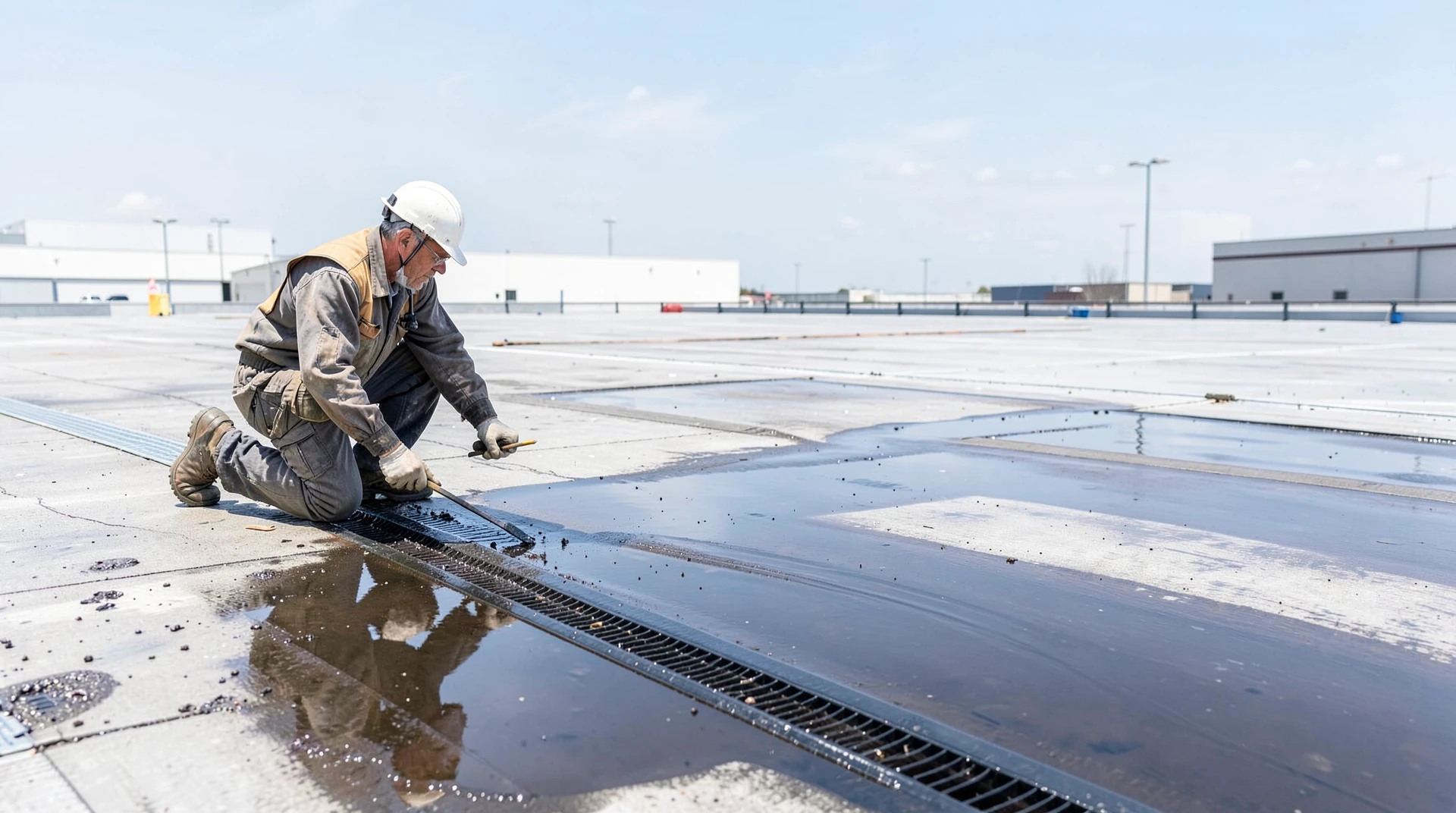
When you notice a collection of stagnant, dark water pooling across your flat roof, it's completely understandable that your first thought is alarm. You might worry about the immediate mess or even fear an impending leak into your ceiling below. We know how stressful it is to see signs of potential structural failure in your home, especially when you’re already planning for a major investment like a new TPO membrane.
But before panicking, we need to talk about what that standing water actually represents. While surface wetness might just be the result of a heavy rainstorm, persistent pooling suggests something deeper: an underlying drainage or substrate issue. At Rock Line Roofing, our experience across Central Texas-from beautiful neighborhoods like Indian Creek to established areas in Country Place-has taught us that a roof failure is rarely about one visible crack; it’s almost always a systemic problem with how water moves through the system.
This guide isn't designed to scare you into unnecessary repairs. Instead, think of it as an essential education session from your trusted local neighbor. We are going to walk you through exactly what needs to happen-the necessary prep work and scientific understanding-before any new material like TPO can be installed. The goal? To ensure the structural integrity and longevity of your home's most critical shield: the roof itself.
When Standing Water Appears: Understanding the True Risks on Flat Roofs
Seeing standing water is definitely an "Aha!" moment when you realize something isn’t right with your roof system. We validate that stress; it’s unsettling to see water pooling in a place where it should be draining away efficiently. However, understanding what's happening beneath the surface changes your perspective from panic to proactive planning.
David Miller, our lead inspector and master roofer for over two decades, often shares this critical insight: "A roof failure is almost never about one visible crack; it’s a systemic drainage or substrate problem." Standing water is simply the physical evidence that your system has poor drainage management-the underlying plumbing isn't working.
The danger of standing water goes far beyond just making the roof look wet. It actively damages the structure in several ways:
- Thermal Stress: Prolonged moisture retention causes materials (especially underlying insulation and wood substrates) to expand and contract unevenly, creating internal stresses that lead to micro-fractures over time.
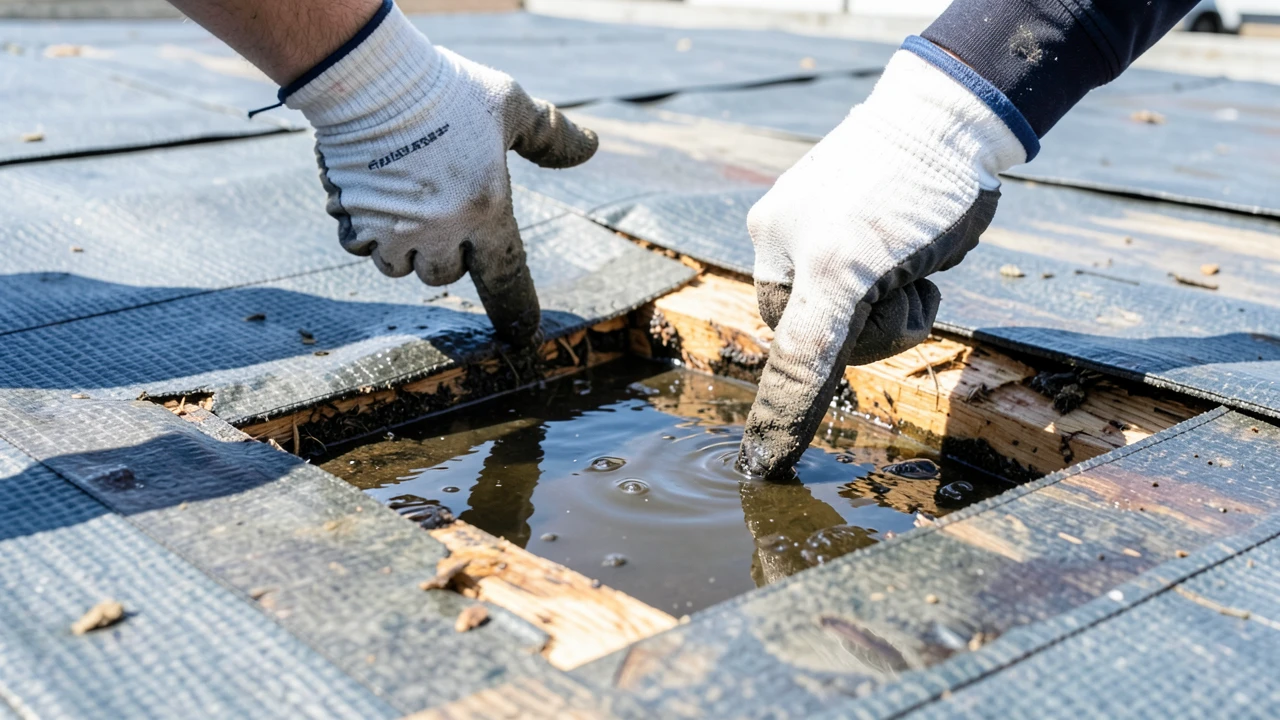
- Material Degradation: Constant saturation accelerates the decay of foundational elements like plywood or particleboard, making them weak and susceptible to rot.
- Mold and Mildew: The constant presence of moisture beneath the surface membrane creates an ideal breeding ground for mold and mildew, which can stain and compromise building materials long before a visible leak occurs.
Before we even discuss laying down a premium TPO sheet-which is a fantastic material in its own right-we must address the root cause. We need to ensure that when we replace the surface layer, we are not simply capping an underlying structural issue with expensive new material. This meticulous assessment is key to dealing with standing water on flat roofs before TPO install.
The Science of Saturation: Why Drainage is More Critical Than Material Choice
To understand why drainage is paramount, you have to briefly look at the physics of it all. A roof's primary job is to be an impermeable barrier, but its secondary and equally critical job is to manage gravity's force-it must guide every drop of water safely away to a drain.
Proper slope and continuous runoff are non-negotiable elements of successful flat roofing. When you see standing water, it suggests issues with drainage management, and for reliable results, professional Rock Line expert flat roof installation is necessary. Gravity isn't doing its job, and those little pockets turn into major problems.
It’s important to differentiate between temporary pooling-say, after an exceptional hailstorm in White Rock Lake-and chronic standing water. Temporary pooling is normal; chronic pooling, which happens season after season, is highly damaging because it continuously saturates the underlying insulation and substrate over years of cycles. Think of it like constantly watering a piece of wood until it rots from the inside out; no amount of paint will fix that. If you are concerned about chronic issues like this, knowing what to look for when considering property roofing needs near you can help guide your next steps.
The prolonged saturation weakens the foundation of your entire roof system. Even if we install the most premium, toughest TPO membrane-a material designed for durability-if the base layer underneath is compromised by water retention and structural weakness, the new membrane will eventually fail in that spot. The integrity starts from below. This brings us to the core challenge: effective dealing with standing water on flat roofs before TPO install requires a deep dive into the grade (the pitch or slope) and confirming every drainage point works flawlessly, not just laying down a new sheet of plasticized material.
The Necessary Prep Work: Preparing Your Flat Roof for Success
If your roof were a complex mechanical system, this preparatory work would be like giving it a full overhaul before putting it back into service. This is where the meticulous labor happens-the stuff that doesn't get seen by the homeowner but dictates decades of peace of mind.
The inspection process we conduct at Rock Line Roofing is vastly deeper than just looking for obvious leaks. It’s an exhaustive investigation into every potential weak link: The inspection process we conduct at Rock Line Roofing is vastly deeper than just looking for obvious leaks; it’s a comprehensive assessment that covers everything from drainage to the need for trusted services for your property.
- Flashing: We inspect metal flashing around parapet walls and edges, as these are prime spots for water entry.
- Drainage Collection Points (Scuppers/Drains): We verify the efficiency of every single drain to ensure they can handle peak runoff rates without backing up or leaking at their connections.
- Substrate Assessment: This is crucial. We inspect the underlying material for any signs of rot, efflorescence (salt deposits from moisture), or structural compromise caused by years of unseen moisture retention.
Simple surface cleaning is never enough. Years of debris-leaves, silt, accumulated dust-act like miniature dams across your roof. If we don't professionally remove this buildup, it will cause future pooling problems immediately after the next heavy rainfall. Furthermore, if grading issues are present, we must introduce mechanical slope correction solutions. This might mean adding specific drainage layers or re-grading certain areas to ensure water moves efficiently and consistently toward the drains-a critical step in dealing with standing water on flat roofs before TPO install.
Addressing the Leak Points: Sealing and Stabilizing Critical Areas
Once we know where the water is going (or failing to go), we must secure every single exit point. The edges, penetrations, and transitions are always the weak links in any roof system. These areas are where water finds its easiest entry point, even if the main membrane is perfect.
We focus heavily on these critical points:
- Parapet Walls and Edges: These vertical walls require specialized, continuous flashing and sealants that can withstand constant moisture exposure and movement.
- Penetrations: Vents, HVAC units, pipes-any item that punches through the roof membrane must be sealed with highly compatible materials to create a perfect, waterproof boot.
- Drain Connections: This is perhaps the most overlooked area. The connection point between the membrane and the drain body is where slow leaks often happen. We use specialized coatings or modified bitumen before TPO installation to thoroughly seal and stabilize these critical joints.
This thorough sealing process is absolutely integral to dealing with standing water on flat roofs before TPO install. It’s not just about putting down a protective layer; it's about creating an absolutely impermeable, sealed barrier that scientifically redirects all moisture safely away from the structure and into the drains, ensuring no lateral spread of water.
Beyond Installation: Maintaining Your Roof's Longevity in the White Rock Lake Climate
A roof replacement is not the finish line; it’s a fresh start toward long-term peace of mind. Roofing, especially flat roofing in Central Texas, requires continuous care. Our climate cycles-hot humidity followed by sudden, violent storms-put immense stress on every component of the system. If you are concerned about the integrity of your roof in this area and need professional roof assistance?, we can help guide you through the necessary steps.
To maintain your roof's lifespan, we advise considering preventative measures:
- Routine Inspections: Treat your roof like any other vital building system (like your HVAC or plumbing). Scheduling semi-annual inspections helps us catch small drainage issues-a slight sag in grade, a minor flashing crack-before they snowball into massive leaks.
- Documentation and Warranty: A reputable local contractor is crucial because we stand behind our work locally. We know exactly what Indian Creek and Country Place properties need to withstand specific weather patterns found right here near the White Rock Lake area.
When you look at the upfront investment required for a comprehensive diagnosis-especially one that identifies standing water issues-don't view it as an expense. See it as essential insurance for your structural integrity and, critically, the resale value of your established home; we can help you learn about our comprehensive services. Knowing that your most valuable asset is protected by an expertly engineered system provides true peace of mind.
Next Steps Toward Structural Peace of Mind
If you’ve seen standing water on your flat roof or are simply worried about the history of drainage issues, please remember this core message: Before considering TPO or any membrane, the underlying drainage system must be verified and corrected. This comprehensive diagnostic assessment-identifying slope failure, substrate compromise, and flashing weaknesses-is our specialized area.
We encourage you not to panic over stained ceilings or visible puddles. Instead, schedule a detailed, no-obligation assessment of your roof’s current drainage state with the local experts at Rock Line Roofing. We are here to provide clarity, accountability, and the highest standard of care for your property. Whether you're near Indian Oaks or deep within Country Place, we bring decades of structural expertise right to your curb. If you suspect immediate danger before a full assessment, knowing about an Urgent roof covering and repair can provide temporary peace of mind.
Our promise remains simple: we don’t just put roofs on; we restore structural safety. Let us give you that feeling of worry-free living again. Call us today at +1 469-589-3827 for a consultation and start the journey toward lasting peace of mind.