
When you hear a contractor talking about roofing, most homeowners immediately think of one thing: leaks. And honestly, that’s completely fair. A leak is scary; it means water has gotten where it shouldn't. But as someone who has spent two decades working on roofs across Central Texas-from small storefronts to large residential properties in neighborhoods like Indian Creek and Country Place-I’ve learned something important: a roof failure, or even just an aging roof, isn't always about the visible shingles or metal panels. It’s often about the underlying system-the drainage points, the flashing details, and how that whole structure interacts with your home's energy envelope.
If you’ve found yourself looking at soaring utility bills in White Rock Lake, you might wonder if there’s a way to keep more of the cool air in during Texas summers and the hot air out when winter hits. The answer is absolutely yes, and one of the most powerful-and often misunderstood-solutions lies in low-slope roofing.
Understanding how can low slope roofing improve building energy efficiency? requires us to look past aesthetics and treat your roof like what it truly is: a critical, complex layer of your home’s defense system. It's not just a hat over the house; it's an integral part of managing heat transfer and maintaining structural peace of mind for decades to come.
Why Energy Efficiency Matters More Than Ever in Our White Rock Lake Homes
Let’s start with where you are right now: your wallet, and your comfort level. If utility bills feel like they’re climbing every spring and fall, or if you worry about the impact of a severe storm on your structural integrity, please know that you are not alone. The cost of energy is rising, and protecting the value of an established home in White Rock Lake means addressing more than just curb appeal.
For the average homeowner, "energy efficiency" sounds incredibly technical-something reserved for engineers. But let me simplify it: Energy efficiency simply means keeping conditioned air where you want it. It's about containing your indoor comfort zone and preventing outdoor extremes (be it 105-degree heat or a sudden chill) from infiltrating the home’s core structure.
When we talk about low-slope roofing, we are talking about far more than just laying down a flat surface. We are discussing creating a meticulously engineered building envelope. The envelope is the barrier that separates your controlled internal environment from the unpredictable outside world. A properly designed low-slope roof acts as a thermal regulator-a silent manager of heat flow.
Many people assume they only need to worry about leaks, which is absolutely vital. But by focusing solely on leaks, we miss out on the massive potential for energy savings. If your roof and its underlying structure are allowing uncontrolled air movement or transmitting excessive heat through structural gaps, you are essentially paying to constantly fight the Texas climate battle-and it costs a fortune in utility bills over time.
The Science Behind Low-Slope Roofing: How Temperature and Drainage Work Together
So, if low-slope roofs save energy, where does that science come from? It comes down to two major concepts: thermal bridging and reflectivity.
First, let's address thermal bridging. This is a critical concept. Think of your house structure-the beams, the joists, the framing materials. These materials are excellent at holding up the roof, but they aren’t great insulators themselves. When heat tries to escape from inside the home, it doesn't always follow the path of least resistance; sometimes, it sneaks out through these structural gaps and connections in the building frame itself. This uncontrolled leak of energy is what we call thermal bridging, and it significantly diminishes your insulation efforts.
Low-slope membrane systems are designed to minimize this problem by providing a continuous, sealed layer that encapsulates the entire structure. We don't just put material over the house; we build an airtight barrier beneath it.
Second, let’s talk about advanced materials. Low-slope roofs often utilize membranes like TPO (Thermoplastic Polyolefin) or Modified Bitumen. These aren't just any tar sheets; they are engineered products. Many of these can be installed with a reflective coating-what we call Cool Roof technology. This is where the science gets really powerful. Instead of letting incoming sunlight heat up the dark roofing material and transfer that heat downward into your home (a process called solar gain), cool roof membranes are designed to reflect that intense solar radiation back out into the atmosphere, sometimes by as much as 70%.
This reflection effect drastically lowers the surface temperature of the roof itself. A cooler roof means less conductive heat is being pumped down into your attic space and living areas below, directly resulting in reduced air conditioning usage. This is one primary way how can low slope roofing improve building energy efficiency?-by keeping the entire structural system running at a lower operating temperature.
Furthermore, we must discuss drainage. A roof that drains properly isn't just clean; it’s structurally sound and thermally efficient. If water pools (ponding) or if moisture accumulates due to poor pitch management, that trapped water promotes mold and mildew growth underneath the membrane. This biological degradation process doesn't just look bad; it compromises the insulation materials over time, reducing their R-value (their ability to resist heat flow). A properly graded low-slope system ensures consistent runoff, keeping the underlying layers dry and performing optimally for decades.
Beyond Insulation: Low-Slope Systems’ Role in Long-Term Structural Health
Now, let's pivot slightly away from just kilowatts and kilowatt-hours. While energy savings are impressive, I want to talk about something that often causes more stress than a high utility bill: structural failure. Because of my background specializing in drainage points, I find that the longevity of a roof depends less on whether you used a $200 shingle or a $1,000 membrane, and more on managing water flow consistently across every single square inch.
A low-slope system is magnificent because it forces us to be hyper-aware of these underlying details. It requires a level of engineering precision that maximizes the continuous underlayment and insulation layers-layers that are incredibly difficult, if not impossible, to achieve with steeper pitched roofs where gravity pulls water away too quickly.
Consider the role of moisture management. Low-slope roofs are engineered specifically for smooth, controlled water flow. They manage drainage in a way that prevents localized saturation or ponding near critical structural beams or supporting walls. If water accumulates in these areas, it can lead to chronic moisture pockets that invite structural rot-the ultimate expensive surprise.
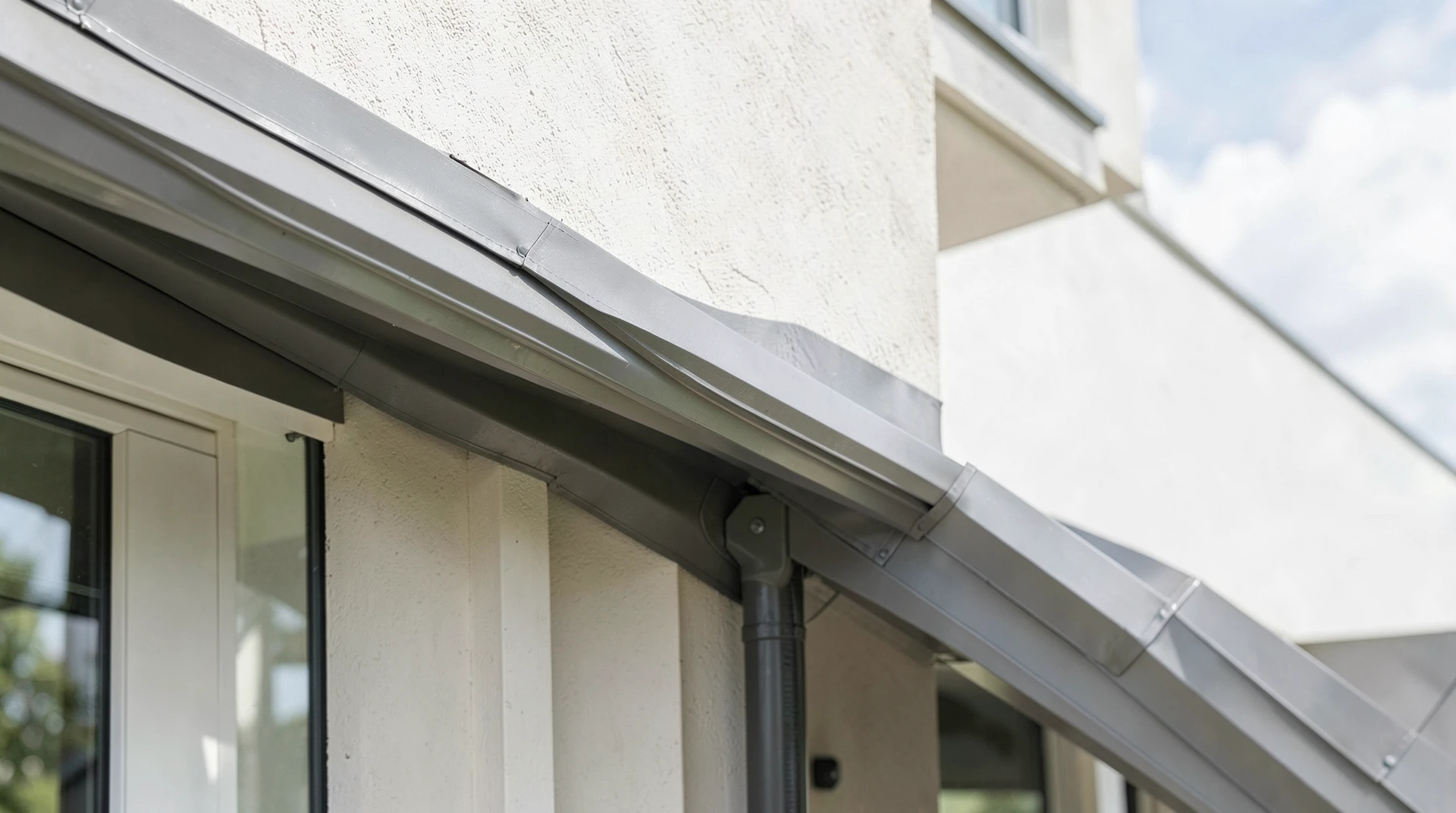
This brings me to flashing and perimeter details. These are the small spots where two different materials meet: where a wall meets the roofline, or where a vent pierces the surface. In my experience, almost all catastrophic leaks trace back to improperly installed or neglected flashings. A well-designed low-slope system integrates meticulous flashing techniques that keep out everything-ground moisture, insects, and general debris-that could otherwise enter and begin its slow destruction process from below.
To give you a simple analogy: Think of your entire house as having an underground plumbing network. The roof's drainage system is the main sewer line for the entire structure. If that drainage line gets clogged or compromised by poor connections, water backs up everywhere. A low-slope design forces us to treat the roofing membrane and its supporting structures with the same care a plumber treats a major mainline-with meticulous attention to every joint and connection.
A Smart Investment: Calculating the True Value of Energy Savings vs. Roof Replacement Cost
I know what you might be thinking right now, especially after reading about TPO membranes and structural flashing details: This sounds expensive. And that is a completely valid objection. When dealing with major home improvements, the initial cost can feel like a financial shock. It's easy to see it as an expense rather than an investment.
But I urge you to reframe this conversation. We aren't just talking about roof replacement cost; we are talking about a long-term operational efficiency upgrade that pays for itself over time. This is where the concept of Return on Investment (ROI) becomes crystal clear.
Let’s look at it mathematically, but keep it grounded in reality. If an optimally designed low-slope system drastically improves your insulation performance and reflection capacity-meaning you are actively reducing solar gain and thermal bridging-you will see tangible savings on your monthly utility bills. Those annual energy savings don't just offset a portion of the initial expenditure; they contribute directly to the home’s overall financial stability.
Furthermore, let's discuss preventative care. Older, complexly flashed pitched roofs can accumulate damage in dozens of small, hard-to-access spots over time. Each tiny failure point increases the risk of major, unpredictable leaks and emergency repairs. A low-slope design, when properly installed, is less prone to these rapid, cumulative failures because it mandates a simplified, continuous, and manageable surface system. This proactive approach minimizes the likelihood of future, expensive emergency roof patch jobs or structural remediation. Furthermore, if you are concerned about immediate threats from severe weather, we can advise on what to do; for instance, you should know to See how we handle emergencies.
To start assessing this for your home in White Rock Lake, don't just look at your current utility bills versus the age of your roof. We need to conduct a comprehensive inspection that assesses both the visible condition and the underlying structural performance-checking flashings, drainage slope, and membrane integrity. This deep dive allows us to provide you with an accurate picture of not just what needs replacing, but where improvements can maximize efficiency.
When It’s Time to Look Beyond the Surface: Assessing Your Home's Full Roofing System
If there is one thing I want every homeowner considering a roofing upgrade to take away from this discussion, it's that you cannot assess a roof simply by looking at it from the street or even by walking across the surface. The most expensive and dangerous problems are always hidden beneath the visible layers.
When we say we need to look beyond the surface, what I mean is that our inspection must focus on three critical areas: drainage points, flashing details, and underlying structure.
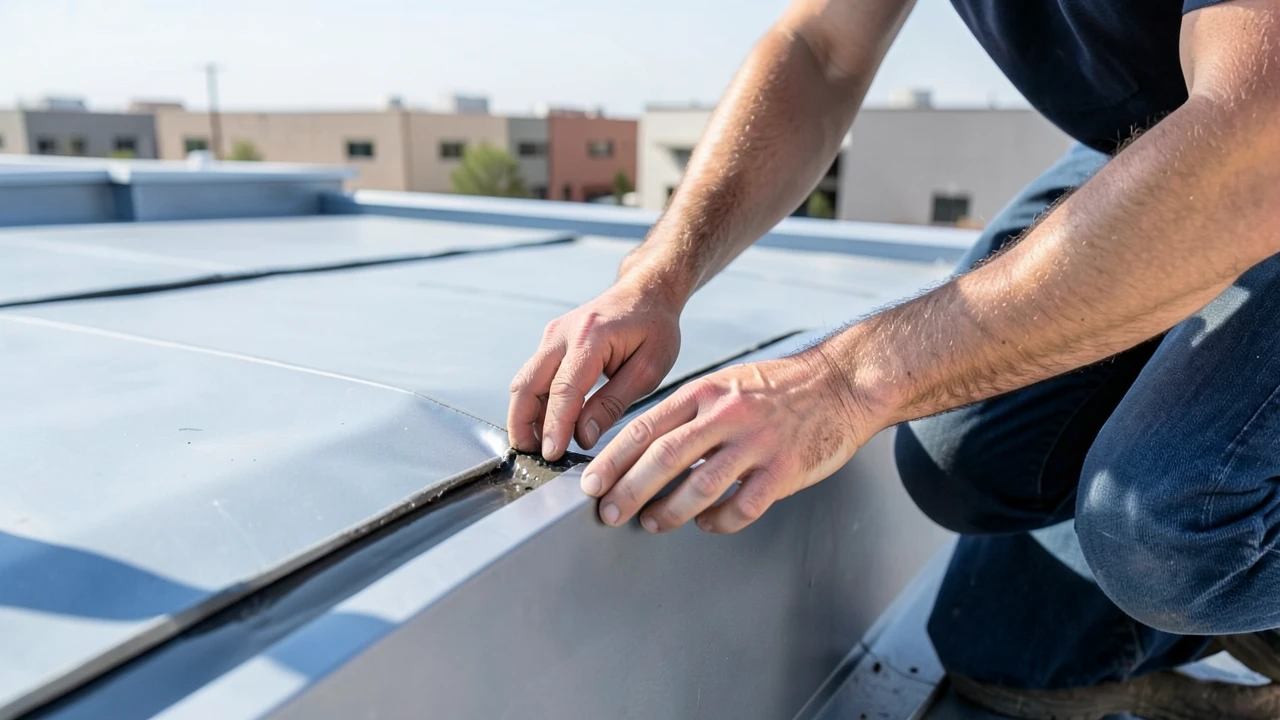
A homeowner might see no obvious damage-no hail marks, no missing shingles-and assume everything is fine. But if we observe dark staining streaks running down your exterior walls near the roofline, or if you have unexplained moisture in an attic space during a routine inspection, those are signs that water penetration is happening somewhere. It doesn't matter what looks right; if the water isn't following its intended path to the drain, we have a problem.
These advanced warning signs mean it’s time for professional intervention:
- Persistent damp spots or unexplained musty smells in enclosed areas. This suggests moisture is getting into the structure and accumulating.
- Visible staining on exterior walls near transitions (like chimneys or vents). This points directly to flashing failure.
- A history of unexpected small leaks, even if they are currently stopped. These are indicators that the underlying system is compromised.
If you live in an established neighborhood here-be it Indian Oaks, Country Place, or any of the beautiful areas near Lake Raymor-your home deserves a roof designed for ultimate peace of mind. We bring decades of local expertise to every job, understanding not just the materials, but the unique structural demands and climate challenges right here in White Rock Lake, TX. If you are looking at options like best roofing near Interlochen, your home deserves a roof designed for ultimate peace of mind.
Don't wait for the next storm or the next surprise bill to force your hand. If you have any concerns about potential leaks, energy loss, or the overall longevity of your roof system, let us perform a thorough inspection. We will look at your entire roofing envelope-from the grade of the underlying drainage to the reflectivity of the final membrane-and give you an honest assessment that helps you make a truly informed investment in your home's comfort and structural future. If you have any concerns about potential leaks, energy loss, or the overall longevity of your roof system, consider consulting an expert for Expert service by Rock Line Roofing.