

Solutions for Inadequate Drainage Sloped Roofs (TPO): Protecting Your Home’s Foundation
When you live in an established community like Indian Creek or Country Place, your home represents more than just four walls-it represents memories, investment, and peace of mind. And nothing threatens that peace of mind faster than the sound of a drip, or the unsettling discovery of dark water stains on a ceiling. If you’ve found yourself staring up at an attic stain and wondering if it's "just condensation," please know that your anxiety is completely valid. Leaks are stressful, costly, and often signal something deeper than simple wear and tear.
At Rock Line Roofing, we’ve learned over two decades of working on roofs across Central Texas (from small storefronts to large residential complexes) a crucial lesson: visible leaks are rarely the primary problem. They are usually just the most obvious symptom of an underlying issue-most commonly, inadequate drainage or compromised structural flow management. Understanding this difference between the symptom (the drip) and the root cause (the faulty drain) is the first step toward securing your home's long-term integrity. We want to provide you with clarity on exactly what needs fixing before we ever discuss replacement costs for your lovely property in White Rock Lake, or explore our coverage areas.
Low-Slope Roofing Explained: Why Drainage Is Everything (Focusing on TPO)
When most people think of roofing, they picture a steeply pitched roof covered in asphalt shingles. But many modern additions, commercial sections, and even large residential patios utilize low-slope roofs. These systems are fundamentally different; they don't rely on gravity running water down a steep pitch-they rely entirely on engineered drainage planes and the perfect integrity of a waterproof membrane.
This brings us to materials like TPO (Thermoplastic Polyolefin). What exactly is it? TPO is one of the most common, durable single-ply membranes used for large areas where traditional sloped roofing isn’t feasible or desired; see all services. It forms an impermeable blanket across the entire surface, acting as a sophisticated barrier against the elements.
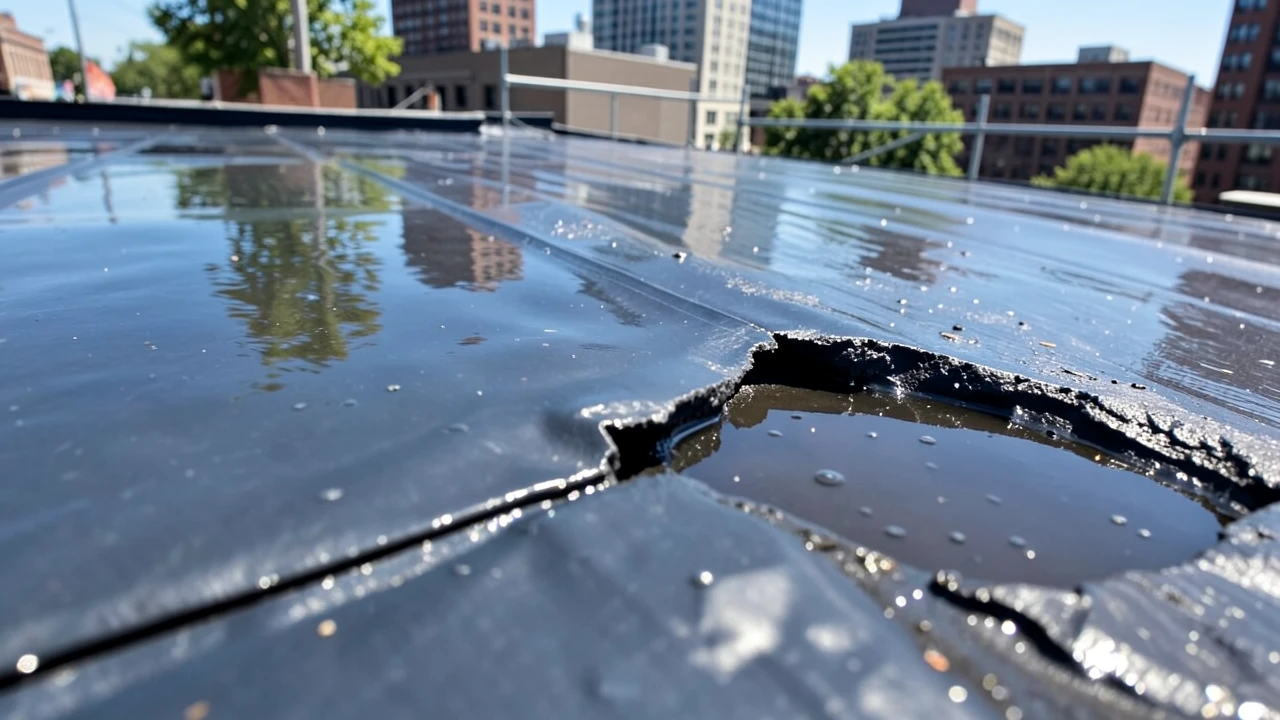
However, this reliance on membrane integrity makes drainage absolutely critical. If your low-slope roof has inadequate drainage, what happens? Standing water-known in the industry as ponding-is incredibly damaging. Ponding accelerates material degradation exponentially and can lead to rapid failure of the underlying structure. It’s not just about having a leak; it's about how long water sits where it shouldn't.
The TPO membrane itself is phenomenal because it acts as such a robust, waterproof barrier, but its performance doesn't start at the top layer; it starts with the entire system underneath. Its effectiveness hinges on proper installation, flawless flashing details around vents and walls, and maintaining the engineered grade or slope across every single square foot of that surface.
Engineered Solutions for Water Management and Leak Prevention
If a roof is like a body, its drainage system is its circulatory network-it must flow perfectly to keep everything alive and healthy. When we identify inadequate drainage on a low-slope structure, our focus immediately shifts from "which material should we use?" to "how do we restore the perfect flow?" This requires detailed engineering solutions that go far beyond patching a visible crack.
Proactive Maintenance and Grading Adjustments
The best defense against costly failures is proactive maintenance. A simple grader adjustment or an upgrade to your gutter system can prevent major disasters down the line. We always start by checking the perimeter flashing-the material that seals where your roof meets a vertical wall or chimney. These details are often overlooked, but they are the most vulnerable points.
Deep Dive into Drainage Improvements
When inadequate drainage is found, we don't just suggest adding some sealant; we propose systemic changes. This might involve:
- Slope Re-grading: Adjusting the underlying substrate to ensure water always moves toward a designated drain point.
- Internal Drain Installation: Installing specialized internal drains or scuppers that collect and direct runoff away from the membrane surface entirely.
- Drainable Materials: Using specialized, high-grade materials under the TPO membrane to guide and manage flow where traditional methods fall short.
When addressing these issues, we must consider the full picture of solutions for inadequate drainage sloped roofs (TPO). A skilled assessment ensures that the solution is structural, not just cosmetic. While comparing membranes-TPO's lightweight nature and high reflectivity are major benefits, but alternatives like Modified Bitumen or liquid-applied coatings also have their uses-the primary focus remains on managing the water flow itself.
The Critical Importance of Flashing and Seams
If you hear me say one thing again, it is this: The details matter most. Even if we use the absolute best TPO membrane available today, if the seams where two sheets meet are improperly sealed, or if a penetrative point (like an HVAC unit pass-through) isn't flawlessly flashed, water will find that path. A skilled assessment ensures every seam and flashing detail is managed professionally to prevent failure.
Signs It's Time for a Professional Drainage Assessment
How do you know when the underlying drainage system needs more than just a simple patch? While visible leaks are alarming, sometimes the signs are quieter-and thus easier to ignore.
What physical signs should you look out for?
- Recurring damp spots in the attic or crawlspace that don't correlate with rain events.
- Visible mold growth concentrated near wall seams or drainage outlets.
- Discoloration or pooling on low-slope sections, especially after heavy rainfall.
We understand the biggest hesitation is often: Am I fixing a leak, or do I need to replace the whole roof? This is the most important question to ask, and it’s why our initial service is non-negotiable. A thorough inspection must assess the structural underpinnings and the drainage capacity-it cannot just look at the visible top layer.
It's actually quite common in established neighborhoods like Indian Oaks or Country Place that residents assume a stain means immediate catastrophic failure, when often it’s simply chronic, minor grade issues exacerbated by regional weather patterns. David Miller has spent decades seeing this pattern: what appears to be minor cosmetic wear is almost always the manifestation of an underlying drainage deficiency.
"A roof is a complex system, and its longevity depends less on the premium materials used and more on the consistent maintenance of every underlying drainage point." – David Miller
We recommend approaching any concerning leak not as a repair issue, but as a Structural Roof Assessment White Rock Lake TX opportunity. This allows us to pinpoint whether the root problem is material failure, improper grading, or inadequate flow management, saving you time and money in the long run.
Restoring Your Peace of Mind in White Rock Lake
Dealing with roofing anxiety can feel overwhelming. You are worried about cost, disruption, and timing-and we get it. That's why our process is built around transparency and trust. When you work with Rock Line Roofing, you don’t just get roofers; you get local neighbors who treat your property like their own.
Our goal is always to give you absolute peace of mind. We walk you through a clear, step-by-step process:
- Initial Assessment: A detailed, non-judgmental inspection focused solely on identifying drainage vulnerabilities and structural integrity issues.
- Clear Findings: You receive a transparent report detailing what needs attention-the specific drains, the flashing details, or the grading adjustments required.
- Solution Proposal: We then present clear options for achieving maximum longevity and performance, always prioritizing cost-effectiveness without sacrificing safety.
If you are noticing persistent dampness, or if your low-slope roof has been subjected to heavy rain events, don't wait until a visible drip forces your hand. Let us conduct that initial drainage assessment for you. We want to identify those hidden issues-the compromised seams, the poor grading, and the inadequate flow management-before they escalate into expensive water damage.
Contact Rock Line Roofing today at +1 469-589-3827 or visit us at 6440 Sudbury Dr, White Rock Lake, TX 6440. Let our local expertise secure your home’s drainage system and restore your peace of mind in White Rock Lake.