
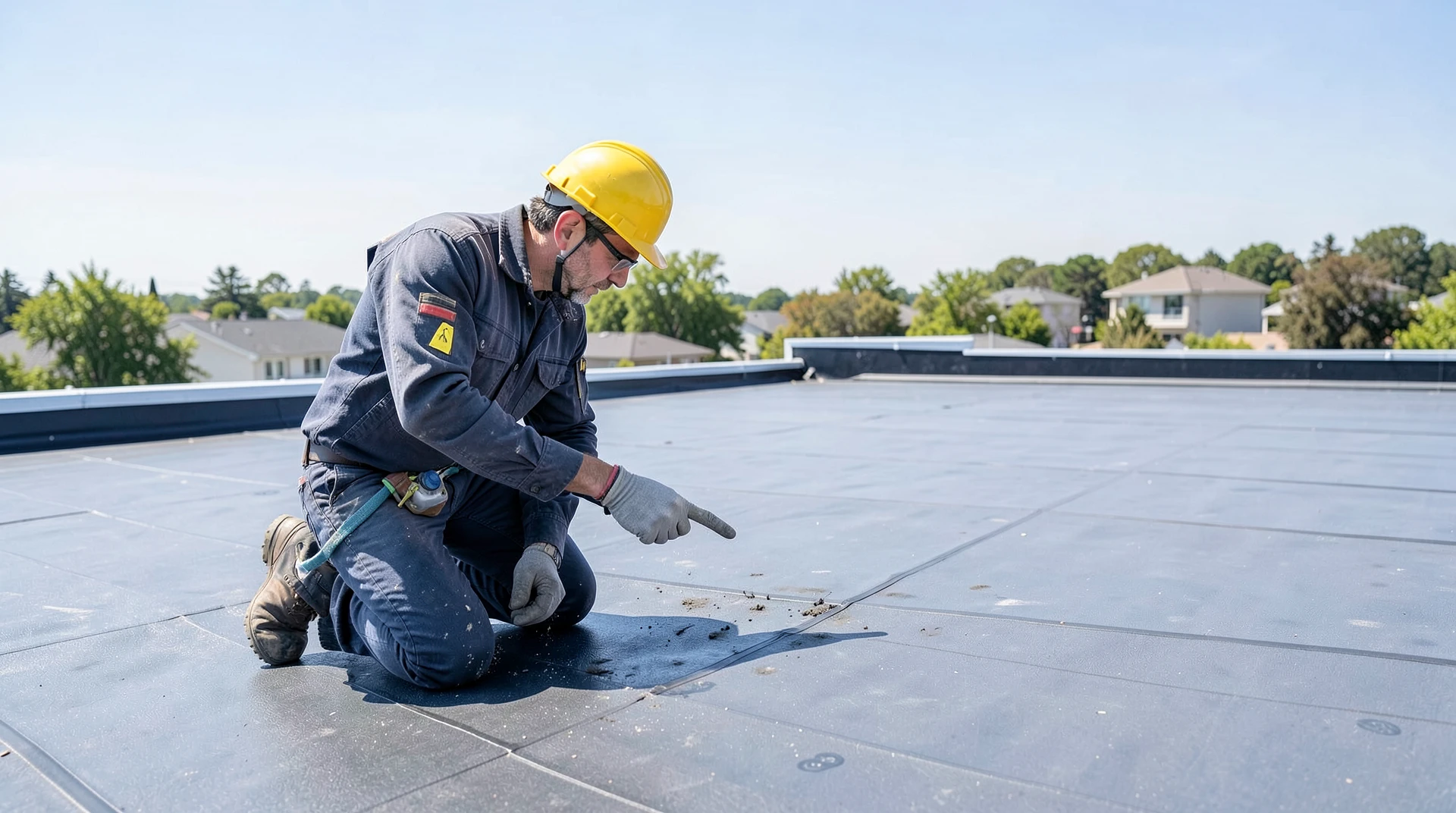
Why Professional Flat Roofing Maintenance Is Crucial for Your White Rock Lake Home
When you hear a drip in your attic or see dark stains forming on a ceiling, the immediate reaction is worry. It’s not just about water damage; it feels like anxiety, a creeping fear that something fundamental to your beautiful home-the very roof above you-is failing. We know leaks are stressful, and realizing that the source of the problem might be hidden beneath insulation or within structural joints can feel overwhelming. As trusted neighbors who have spent over two decades working on roofs across Central Texas, we’ve learned one profound truth: a roof failure is almost always just the visible symptom of a deeper drainage or system issue that needs to be identified proactively. Because flat and low-slope areas like those found in many desirable neighborhoods, such as Indian Creek or Country Place, function so differently than traditional sloped roofs, they require specialized care. This brings us to the critical question: why is professional flat roofing maintenance important? Simply put, because neglecting these systems means accepting exponentially higher risk and cost down the line.
When a Simple Leak Becomes Your Biggest Worry: Why Inspection Matters
For most people, thinking about leaks suggests water running from above. But for flat or low-slope roofs, the threat is often stealthy-it's not always a visible crack you can point to. Unlike sloped roofs where gravity helps ensure rapid runoff, flat areas are designed to hold and move water gently toward specific drains. This difference makes them susceptible to unique forms of failure that only consistent inspection can reveal.
We need to start by validating the core pain point: your peace of mind. When you own an established family home in a community like White Rock Lake, you've invested heavily in its structural integrity and curb appeal. Nothing undermines that feeling more than the persistent worry about hidden water damage or mold growth. Our goal is always to eliminate that worry by understanding what’s happening under the surface.
The biggest threat we face isn't necessarily a giant visible tear; it's often an underlying drainage issue, poor flashing details where two materials meet (like a vent stack meeting a parapet wall), or slow membrane degradation beneath your feet. This is what we call ‘invisible failure.’ These failures are insidious because they don’t create dramatic puddles-they create persistent dampness that weakens the system over time.
Allow me to share David Miller's perspective on this: We know that roof longevity depends less on the premium material you buy today and much more on consistently maintaining every single underlying drainage point and structural joint. This is why proactive care, encapsulated by a thorough inspection, isn't an expense-it’s insurance for your home's comfort and value. If we wait until water stains appear inside your walls before calling us, the problem has already escalated far beyond a simple repair.
The Hidden Science Behind Flat Roofing Failure
To truly understand why is professional flat roofing maintenance important?, you have to first grasp the mechanics of how these systems operate. Modern flat roofing materials, such as TPO (Thermoplastic Polyolefin) or Modified Bitumen, are incredible engineering marvels designed to create a seamless, waterproof membrane. They rely entirely on remaining continuous and uncompromised.
These membranes are under constant, relentless stress. Every single day brings UV exposure that degrades polymers; every seasonal swing introduces temperature extremes that cause materials to contract and expand; and even normal foot traffic or HVAC unit vibrations add micro-stresses over decades of service.
The failure points for a flat roof are notoriously difficult to spot without specialized knowledge. Homeowners often overlook these three critical areas:
- Poor Drainage Slope: If the overall slope isn't maintained, water will pool in low spots.
- Clogged Scuppers/Drains: This is one of the most common causes of crisis. Leaves, silt, and dirt accumulate over time, effectively negating the roof’s ability to drain properly-this creates ponding.
- Flashing Failure: Flashing is critical; it’s the material used around penetrations (vents, chimneys, pipe jackets) to direct water away from the membrane. When this fails, water finds the easiest path downward and into the structure.
Ponding, in particular, is a major danger. Standing water dramatically increases the load on your roof structure and it accelerates the breakdown of the membrane due to prolonged saturation. It’s like leaving a patch of skin wet for weeks; eventually, even healthy tissue begins to break down. We compare a well-maintained flat roof system to a well-maintained body-it needs constant checks on its joints (flashing), circulation (drainage), and underlying support structure. This technical understanding is why professional assessment is non-negotiable.
What Professional Flat Roofing Maintenance Actually Entails
When we talk about maintenance, many people picture just “patching holes” with a sealant. While minor sealing might be part of it, that description drastically undersells the depth of what a true professional roofing system assessment involves. It is a comprehensive evaluation of *every component* designed to keep water out.
Our process starts not with an expensive quote, but with detailed data collection. We are looking at four main areas:
- Drainage System Integrity: We physically examine every scupper and drain inlet. Is the slope maintained? Are there signs of blockage or erosion around the pipes? This is where we check for debris buildup that needs cleaning.
- Penetration Assessment: Every vent, every pipe, and every chimney flashing detail gets scrutinized. Has any sealant dried up or peeled away from its substrate over time? We are looking at the immediate failure points.
- Membrane Health Check: Using specialized equipment (and sometimes just our experienced eyes), we check the membrane itself for micro-tears, signs of blistering, or areas that might be too brittle due to age and UV exposure.
- Edge Detail Review: The edges of the roof are critical points where water is channeled off. We examine these flashing details closely to ensure they meet modern building standards and local climate demands.
A good professional service doesn't just identify a tear; it identifies why the tear happened, whether it was poor drainage or material fatigue. This allows us to distinguish between minor repairs-like an immediate sealant application on a small stress crack-and major structural issues that signal the entire waterproof layer is nearing the end of its life and requires full replacement. By undergoing this detailed process, we empower you with knowledge about your roof's true health before it becomes a crisis requiring emergency measures.
Ignoring Maintenance Means Accepting Higher Risk and Cost
Let’s address the elephant in the room: cost. When considering professional maintenance, many homeowners hesitate because they worry about a financial shock. But I want to shift that perspective entirely. Think of proactive care not as an expense, but as massive risk mitigation.
The truth is, small maintenance issues-like minor flashing gaps around a dryer vent or slight debris buildup in a drain-are relatively inexpensive and fast to fix when caught early by an inspection. If you ignore them, they don't just stay small; they escalate quickly through what we call the domino effect of leaks.
Here is how that progression happens: A tiny crack in the membrane might allow water to pool beneath insulation or into structural wood framing-a place where you can’t see it from the ground. This persistent dampness doesn't just rot the wood; it creates an ideal environment for mold growth and compromises the building envelope, weakening the structure itself before the leak even becomes visible in your finished ceiling.
We often hear this story: A homeowner calls us after a major hailstorm or high winds event, worried about immediate damage. While we address the storm repair, we also find that the underlying drainage system was already compromised by years of neglect. Paying for an emergency roof replacement after a massive storm is always exponentially more expensive in terms of labor, materials, and-most importantly-the stress and disruption it causes to your life than scheduling a routine maintenance inspection upfront.
Consider this anecdote: We recently inspected a beautifully maintained home near Indian Creek that had avoided major leaks for years. However, because the homeowner had postponed a drain cleaning for three seasons, we found severe silt buildup in two critical scuppers. This minor blockage was responsible for localized ponding that stressed and weakened the membrane just enough that it failed under normal rainfall-a failure that could have been prevented with a simple quarterly check.
From Assessment to Action: Determining Your Roof's Next Chapter
The ultimate value of committing to professional flat roofing maintenance is that it gives you clarity. It takes the guesswork out of a multi-thousand dollar investment. When we finish our assessment, we don't just leave you with a pile of receipts; we give you a full narrative of your roof’s structural health and its path forward.

This process helps determine if the best solution is:
- Simple Repairs: Just sealing flashing gaps or clearing debris (the cheapest option).
- Protective Coating: Applying a specialized layer over an otherwise sound membrane to extend life and protect against UV exposure.
- Full Replacement: When the underlying material has lost too much elasticity, making it unsafe to repair, a full replacement with modern materials like TPO or advanced coatings is necessary for long-term durability.
We guide you through this decision-making process. We help separate cosmetic wear-like surface discoloration from water runoff-from genuine structural failure, which is critical for managing your budget and avoiding unnecessary expense. Don't panic when you see a stain; focus on why the water accumulated there. Understanding that 'why' is what we provide.
Ultimately, our job is to protect your investment while minimizing disruption to your life in White Rock Lake. We treat your property like it’s our own-meaning the goal is always a clean job site and minimal mess, whether we are performing a small repair or an entire system replacement. Our focus remains on restoring not just the roof, but your complete peace of mind. If you suspect any issue with water management, or if you simply haven’t had a comprehensive inspection done in years, please don’t wait for disaster to knock at your door. Call us today at +1 469-589-3827 or stop by 6440 Sudbury Dr, White Rock Lake, TX 6440 so we can walk through the structural needs of your roof first, and then discuss our full range of services that make sense for your budget.