
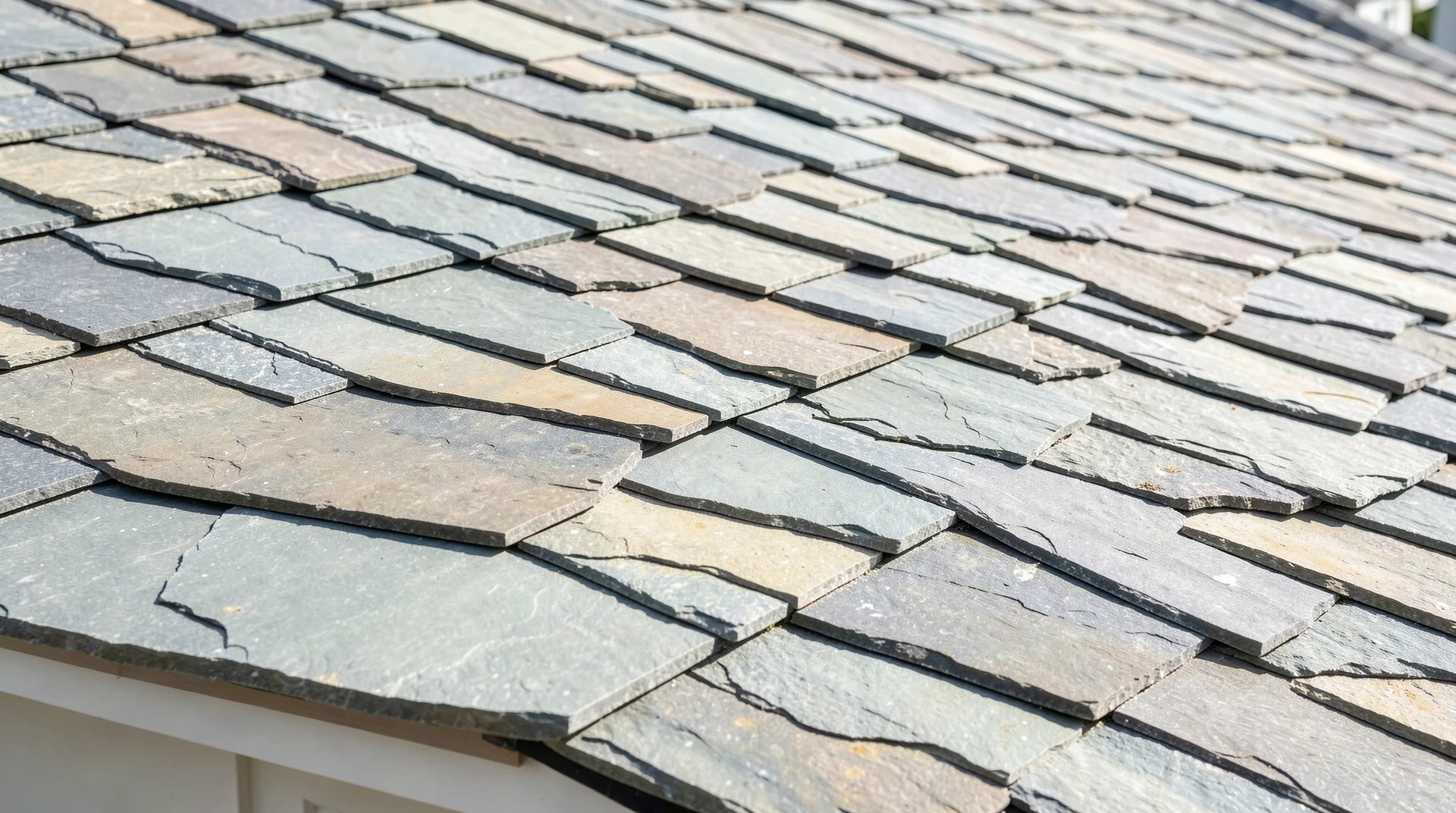
Choosing a roofing material is one of the most significant investments you'll make in your home. When homeowners in established communities like Indian Creek or Country Place start looking at premium options, they often land on materials like slate or natural stone. Both are stunning, giving an unparalleled level of curb appeal that significantly boosts resale value. But when faced with a showroom full of similar-looking tiles and wildly varying price tags, it’s completely normal to feel overwhelmed-or even anxious about making the wrong choice.
At Rock Line Roofing, we know that selecting a roof isn't just about picking the prettiest color; it’s about understanding an entire complex system. As I've spent over two decades working on roofs across Central Texas, what I've learned is that the true longevity of your roof depends less on the material itself and more on how well every underlying drainage point-the flashing, the decking, the underlayment-is handled. This guide is designed to cut through the confusion regarding what is the difference between slate and natural stone tiling? We’ll provide the expert perspective you need to feel confident in your decision, ensuring that whatever material you choose will truly last against the unique challenges of a Central Texas climate.
Understanding the Core Difference: Slate vs. Natural Stone Tiling
The primary confusion stems from the fact that both materials are natural earth products and share an elegant, timeless aesthetic. However, scientifically speaking, they belong to different geological classes, which dictates their composition, performance, and handling during installation.
True Natural Slate:
When we talk about slate in roofing, we are referring to a metamorphic rock. This means the original material-often shale-has been subjected to intense heat and pressure over millions of years by tectonic forces. This process fundamentally changes its structure, creating inherent layers or "splits." Because this layering is natural, true slate exhibits remarkable consistency in thickness and structural integrity. It tends to be predictable; it breaks along natural seams, making it a very reliable, uniform material that has been favored for centuries due to its dependable performance.
Natural Stone (e.g., Quartzite, Flagstone, Sandstone):
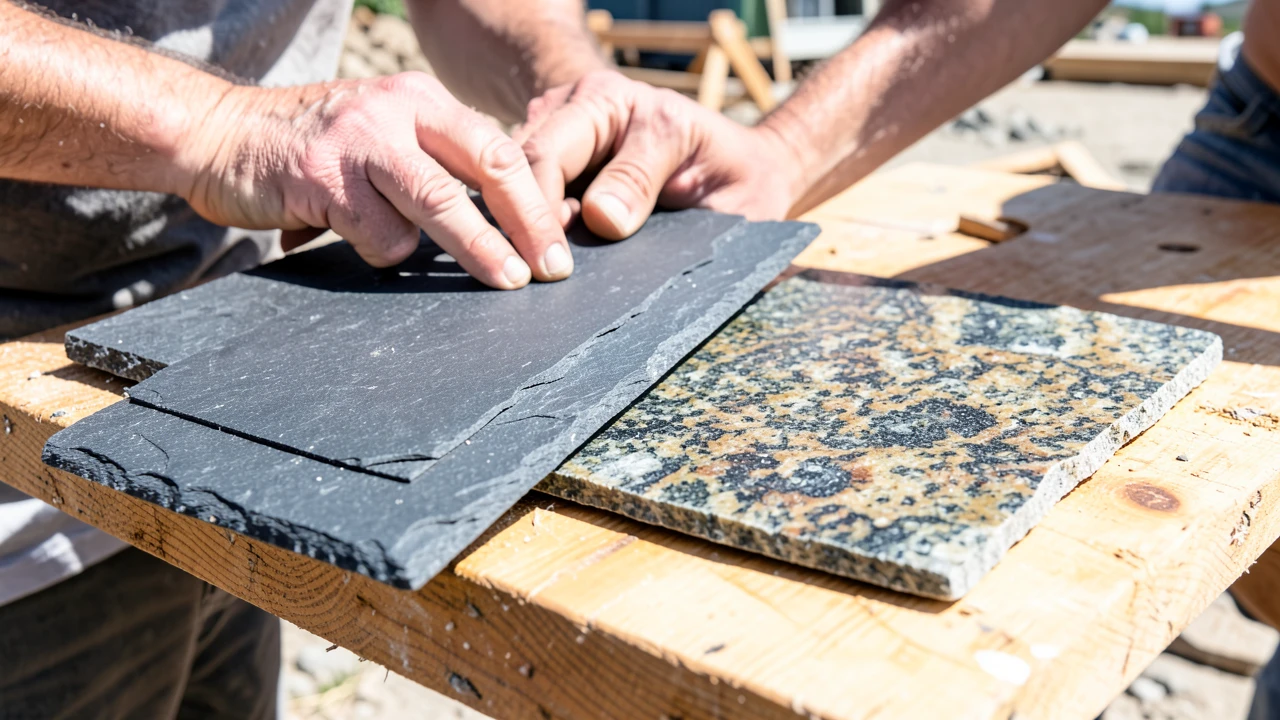
The category of "natural stone" is much broader than slate. These materials are quarried from various sources and can include highly varied types like quartzite or flagstone. While they possess incredible beauty-and often unique color variations you won't find in manufactured products-they have far greater geological variability. Unlike the naturally layered structure of slate, different natural stones exhibit diverse densities, crystalline structures, and coloration that depend heavily on where and how they were quarried. This high degree of variation means specialized handling is required for each type, as no two pieces are guaranteed to be exactly alike.
The structural difference comes down to predictability: Slate's metamorphic history gives it a highly predictable performance profile. Natural stone offers stunning variety but requires the expertise of a craftsman who can manage that variability and ensure consistent installation across an entire roof surface. When considering what is the difference between slate and natural stone tiling? remember that 'natural stone' is an umbrella term, while 'slate' refers to a very specific, highly durable metamorphic process.
Beyond Appearance: Durability, Weather Resistance, and Longevity
For any homeowner in the Dallas-Fort Worth metro area-whether you are near Indian Oaks or deep into Country Place-the most critical factor isn't just how beautiful the roof is today; it’s how it will withstand decades of temperature swings and intense storm events.
Handling Texas Weather Extremes:
Both materials, when properly installed, boast incredible durability. They handle the extreme thermal cycling common to Central Texas (scorching summers followed by cooler winters) better than most manufactured roofing systems. However, they are heavy. This is a critical point that cannot be overstated: these are genuine geological treasures, and their weight places immense structural load on your underlying roof decking and structure.
Weight and Structural Load:
Because of this weight, we must perform meticulous assessments of the existing structure before any material selection is finalized. If the original roof deck or supporting trusses have been compromised by age or previous water damage, adding thousands of pounds of slate or natural stone can create a significant stress point that compromises structural integrity across the entire dwelling.
Maintenance and Peace of Mind:
In terms of maintenance, correctly installed versions of both materials are remarkably low-maintenance, offering peace of mind for decades. You won't be dealing with the frequent sealing or coating required by some asphalt systems. However, any high-end roof requires periodic inspection to ensure flashing points-where the roof meets chimneys, vents, and walls-remain sound.
Anecdote: I recently worked on a beautiful historic home in Indian Creek where the owner was worried about maintenance. The underlying structure had suffered from decades of poor drainage around the chimney stack. No matter how perfect the slate tiles looked, if the copper flashing beneath them wasn't properly sloped and sealed, water would still find its way through. This simple reminder proves that structural integrity matters most.
The Foundation: Why the Underlying Roof System Matters More Than the Tile
This is where my twenty years of experience really comes into play, and it’s perhaps the most important lesson I can share with any homeowner considering a high-end roof replacement. A roof is not merely a beautiful blanket laid over your house; it is a complex system. Think of it less like tiling and more like plumbing-if one joint fails, the whole system leaks.
A beautiful, expensive slate tile or natural stone piece will eventually leak if the underlying drainage points are compromised. The most durable material in the world cannot compensate for poor flashing, inadequate structural support, or degraded decking.
When we discuss what is the difference between slate and natural stone tiling? the cost comparison often focuses only on the visible surface materials. But I urge you to consider the total scope of work. These premium systems require specialized underlayments-often incorporating copper or lead flashing techniques-that are exponentially more complex and costly than standard residential roofing practices.
Before we even discuss material type, your first step must be a comprehensive structural assessment. We need to confirm that your current roof deck can handle the immense weight of either slate or natural stone tile, and that all critical drainage points are sound. This consultation ensures that when you finally select your preferred premium material, you are building it upon a solid, reliable foundation.
Preparing for Your Full Roof Replacement Project in Central Texas
Regardless of whether we ultimately determine that slate's predictable consistency is ideal for your property or if the unique variation of natural stone better suits your aesthetic vision, one truth remains: A full roof replacement guided by expert local knowledge is the most reliable path to long-term peace of mind.
The process starts with a thorough pre-replacement assessment. This involves more than just looking at the top layer; we audit the structural elements: checking flashing details for wear and tear, inspecting drainage patterns from gutters down to the ground, and performing comprehensive decking audits. This level of detail is what separates a simple roofing job from a true architectural restoration. This level of detail is what separates a simple roofing job from a true architectural restoration, whether it involves slate or more general commercial roofing concerns.
We understand that planning this kind of high-end project can feel overwhelming, especially when you are facing potential cost increases. Our goal is always complete transparency. We will walk through why the whole job-the reinforcement, the specialized flashing, and the labor-is necessary, not just the tile itself. This clear scope of work helps eliminate guesswork and ensures that we are building a roof designed to last for generations in your White Rock Lake home.
We treat your property like it's our own; the goal is always minimal disruption to your daily life. Our crews are professional, highly trained, and focused on executing this complex replacement quickly and cleanly. When you’re ready to move from comparison shopping to concrete action, don’t hesitate to talk to a local expert who understands the specific building codes and unique climate challenges of White Rock Lake homeowners. Getting started with a full roof replacement consultation is the first step toward securing true peace of mind for your family. If you are looking for reliable roofing services Creek Crossing can provide, we ensure that our crews treat your property like it’s our own; the goal is always minimal disruption to your daily life.