
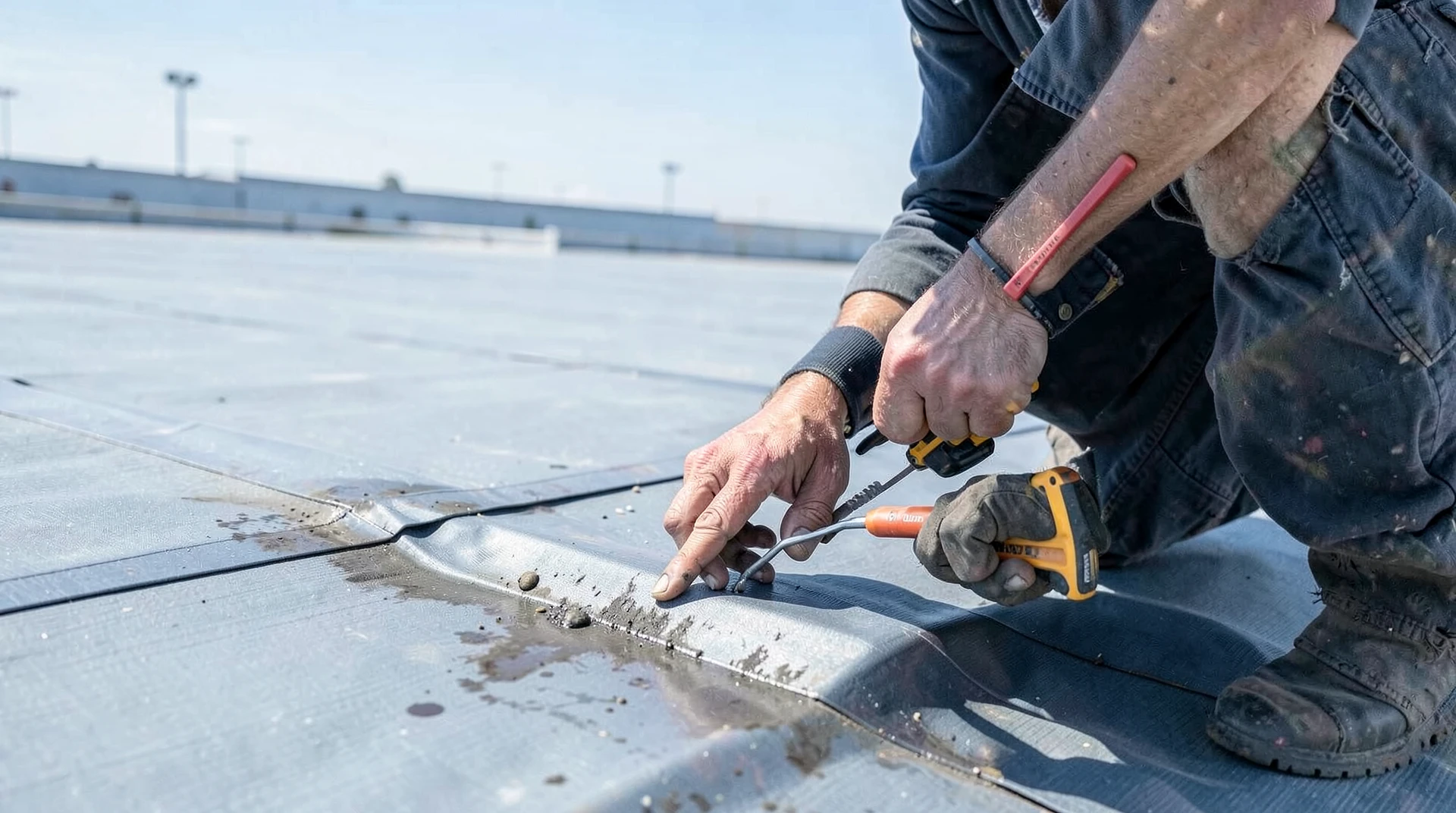
Finding the Right Source of Low Slope Roofing Materials Near Me: A Guide for White Rock Lake Homeowners
When you hear that concerning drip in your attic, or notice dark, creeping stains spreading across a finished ceiling, your first thought is likely to call a contractor and ask one simple question: "Where do I find a reliable source of low slope roofing materials near me?" It’s an anxious question, born from the stress of unexpected leaks and costly water damage. We understand that anxiety completely. Dealing with roof issues-especially those involving flat or near-flat surfaces-can feel overwhelming because it involves complex building science, not just simple shingles.
Before we even talk about finding a specific brand or material supplier, I want to share something crucial from my decades of experience in Central Texas: A roof failure is rarely just about the material itself. It’s usually the visible symptom of a deeper drainage pattern issue or a structural flaw-like improper flashing details or compromised subsurface venting. Getting materials without first diagnosing the root cause is like putting a band-aid on a cracked foundation; it won't fix the underlying problem. Our goal, right here in White Rock Lake, is to bring you peace of mind by guiding you through the entire process, starting with a thorough assessment.
When a Flat Roof Isn't Enough: Understanding Low-Slope Roofing Needs
To truly understand why sourcing materials requires expert guidance, we first need to define what low-slope roofing actually is. A pitched roof-the kind most people are familiar with-sheds water quickly via gravity and is covered by visible layers like shingles. Low-slope roofs, however, are designed for commercial buildings and many modern high-end homes in the Indian Creek or Country Place areas that have very gentle pitches (generally less than 12/12).
Because these roofs rely on a membrane to shed water slowly over time, they cannot afford to fail at seams or drainage points. Their longevity depends entirely on the membrane's integrity, not just visible layers of protection. They are complex systems that must account for subsurface drainage and proper load management.
We know you might be stressed right now, perhaps dealing with a leak today and needing an immediate fix. Temporary patching can buy you time, but it is never a permanent solution. We need to diagnose the why behind the leak before we discuss what material to use. A simple issue like poorly sealed flashing around a vent pipe can cause years of water damage that appears to be an overall roof failure-it’s about identifying those critical weak points first.
Navigating the Options: What Are Low-Slope Roofing Materials?
When you are searching for a source of low slope roofing materials near me, you will encounter a lot of acronyms and options. It's easy to feel lost in the choices, but I want to simplify it by discussing the main players: TPO, Modified Bitumen (Mod-Bit), and specialized coatings.
These aren't just interchangeable terms; they perform differently based on your local climate, structural needs, and intended lifespan. Think of this educational discussion not as a sales pitch, but as an objective comparison to help you understand why one system might be better suited for the unique microclimate of Central Texas than another.
TPO vs Modified Bitumen Roofing: A Practical Comparison
TPO (Thermoplastic Polyolefin): You can think of TPO as a highly durable, modern plastic sheet. It is known for its excellent UV resistance and ability to reflect heat, which is fantastic in our intense Texan summers. Because it's a synthetic material, it tends to be lightweight and easy to install over large spans.
Modified Bitumen (Mod-Bit): This material is essentially a flexible, rubberized asphalt sheet. It’s incredibly tough and has been used for decades because of its excellent elasticity-it can flex with the building structure better than some materials. When comparing them, neither is inherently "better"; they are simply suited for different substrates and structural challenges. The best choice depends on your existing roof deck, the anticipated foot traffic load, and the specifics of your site drainage.
The crucial takeaway here is that finding a reliable source doesn't mean finding the cheapest material; it means finding local experts who understand proper installation techniques. Improper seams-the most common failure point-or inadequate substrate preparation will void any warranty immediately, regardless of how premium the material is.
Beyond the Material: The Critical Role of Structural Integrity and Drainage
This section contains perhaps the most important piece of advice I can give you about roofing. If I could leave homeowners with only one thought, it would be this: The roof system is a complex machine whose life depends on every single underlying drainage point.
We spend so much time looking up at the visible membrane, but 90% of low-slope failure points are hidden below the surface. The greatest enemy to any flat roof is ponding water-that's standing water that cannot drain away quickly enough. If your structural design or existing grading allows water to pool for even a few hours after a storm, you are inviting material degradation and potential catastrophic leaks.
This is where structural roofing drainage assessment comes into play. We have to examine the details:
- Flashing: Are the metal pieces around vents, pipes, and parapet walls perfectly sealed? These small areas are pressure points for water entry.
- Parapet Walls: Do these vertical retaining walls drain correctly? If they hold back soil or debris, they can compromise the roof membrane over time.
- Subsurface Drainage: Is the underlying deck designed to handle the load and ensure proper gradient (slope)?
I recall working on a beautiful property in Indian Oaks recently where the visible portion of the roof looked pristine. However, when we traced the water staining back, it wasn't the membrane itself; it was decades of debris buildup trapped behind an improperly detailed flashing point near a HVAC unit. It was a structural drainage issue that simply needed remediation, not a brand new surface layer.
As I often tell my clients: “A roof is a complex system, and its longevity depends less on the premium materials used and more on the consistent maintenance of every underlying drainage point.” A true local expert doesn't just sell you TPO sheets; they solve the underlying structural problem that allows those sheets to perform perfectly.
The Full Assessment: What to Expect When Planning Your Roof Replacement
It is completely normal for an initial quote to feel overwhelming, especially when dealing with a major investment like your roof. However, we want to help you manage cost expectations by making sure every dollar spent is going toward the actual structural need. Our process is designed to provide transparent pricing by identifying exactly what needs replacement versus what can be repaired or reinforced.
A thorough professional assessment of your property-whether it’s in Chapelar Park or anywhere else in White Rock Lake-is much more detailed than just walking over and looking at the surface. We look for:
- Underlying Decking Condition: Is the concrete or wood substrate sound? Has it settled or cracked due to temperature shifts?
- Venting Systems Integrity: Are vents clogged, damaged, or positioned incorrectly, leading to trapped moisture?
- Local Drainage Patterns: We assess how water moves across your property in relation to natural grades and local storm runoff paths.
Furthermore, when dealing with high-end residential properties, warranties are paramount. You need a contractor who provides both material warranties (backed by the manufacturer) and a robust workmanship guarantee. This distinction is critical; it separates general material suppliers from true roofing specialists dedicated to your peace of mind. By focusing on structural safety and resale value, we treat this not as an expense, but as a necessary investment in your family's home security.
Protecting Your Property: Partnering with Local Experts in Central Texas
When you choose a local partner here in White Rock Lake, you are choosing someone who understands the specific architectural nuances of our community-from the established feel of Indian Oaks to the modern developments near Country Place. We don’t just bring materials; we bring decades of localized experience working on everything from small storefronts to large residential complexes and all our services.

We know life doesn't stop because your roof needs attention. That's why we prioritize minimal disruption and guaranteed clean job sites. If, however, a sudden hailstorm or unexpected leak strikes, we are equipped for rapid response-providing emergency tarping and assessment immediately while maintaining the highest standards of quality that you expect from a trusted neighbor.
So, when the urgency hits and you start searching online for "source of low slope roofing materials near me," please remember this: The first step is always the diagnosis. We will not push you toward any specific material until we have fully assessed your structural needs, drainage patterns, and unique local challenges.
Instead of focusing on sourcing materials today, let’s schedule a professional assessment. Let us walk through the roof system with you, pointing out exactly where the potential weaknesses are-whether they require a minor patch or a full membrane replacement. This initial conversation will give you clarity, transparency, and most importantly, peace of mind.
Ready to get a true picture of your roof’s structural health? Contact us today for an assessment built on trust, local knowledge, and decades of Central Texas roofing expertise.